


Gore navedeni simptomi ukazuju na zaglavljenu ili neispravnu kočionu čeljust. Ali šta uzrokuje da se kočione čeljusti zalijepe u ovim uvjetima?
△caliper slide
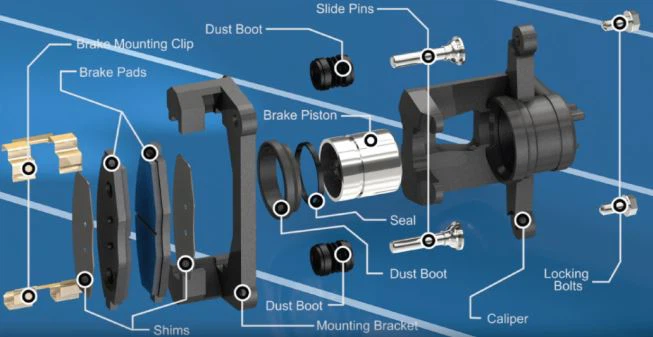
The brake caliper has grooves that hold the brake pads. When the driver depresses the brake pedal, the brake pads slide in, and when the driver releases the brakes, they slide out. If the brake pads stick in the grooves, the driver may experience parking difficulties. Brake pads can get stuck with debris, but if cleaning the grooves doesn't fix the problem, the grooves themselves may wear out. If this is the case, the caliper may need to be replaced completely.
△čeljusti vijak
Vijci čeljusti također proklizavaju. Tobogani imaju gumene čizme za dobro podmazivanje. Međutim, ponekad će se gumene čizme pokidati, što će uzrokovati sušenje vijaka. Ako se to dogodi, kočnice se mogu zaglaviti. Neka licencirani tehničar pregleda sklop kočnice kako bi utvrdio da li je potrebno popraviti ili zamijeniti vijke.
△caliper piston
Klipovi čeljusti mogu biti krivci. Kao vijak, oko klipa čeljusti nalazi se gumena čaura koja ga štiti i podmazuje. Ako se gumena čizma pokida, rđa i drugi ostaci će se polako nakupljati unutar klipa. U tom slučaju se kočiona čeljust može zaglaviti. Ako je ovo problem, možda će trebati zamijeniti cijeli sklop čeljusti.
△brake hose
Occasionally, a vehicle's brake hose can wear out. If this happens, the brake fluid may only flow one way, causing the brake pads to slow the vehicle down. However, when the driver does not apply the brakes, the fluid cannot flow in the reverse direction, causing the calipers to seize. This problem is difficult to diagnose, but an experienced professional should be able to isolate a problem with the brake caliper.